
Ask most coaches what separates a good session from a poor one and they'll say things like energy, the quality of the drills or how switched on the players were. Rarely does the session plan itself get the credit. And yet the plan is the thing that determines almost everything else.
This article breaks down why the session plan is so often undervalued, what the most common planning mistakes look like in practice and what a well-structured plan actually contains across different age groups.
Players are sensitive to structure even when they cannot name it. A session with clear purpose has a flow to it. The warm-up connects to the theme. The main activity builds toward something meaningful.
The game at the end feels like a natural conclusion rather than a way to fill time. Players in that environment feel challenged appropriately, understand what is being asked of them and leave with a sense of having worked on something real.The contrast in a loosely planned session is tangible. Transitions drag. Instructions get repeated because the coach is working things out in real time.
Drills that were not thought through for numbers or space fall apart and take too long to fix. The players who are most capable switch off first. The ones who need the most support get the least of it because the coach is occupied managing problems rather than coaching.The difference is not always visible in the first ten minutes. But players feel it. Over a season, it compounds.
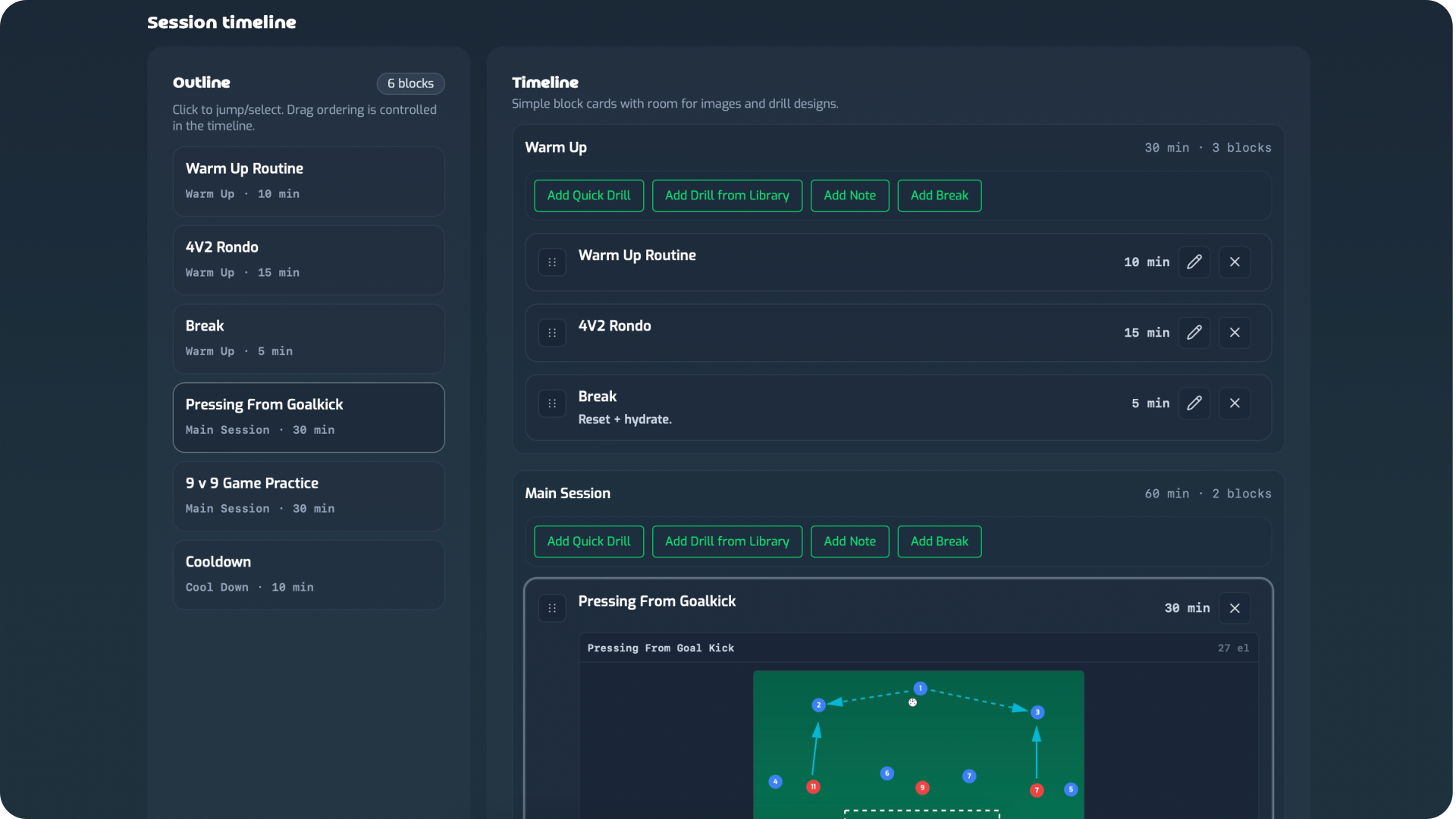
Understanding what good planning looks like is easier when you first identify where most coaches go wrong. The patterns are consistent across grassroots football at every age group.
1. Planning the activity instead of the objective
The most frequent mistake is deciding what drill to run without first deciding what the session is actually for. A sequence of activities is not a plan. A proper session objective sits behind every activity and answers one question: what decision or skill am I coaching players to develop today? Without that anchor, even technically sound drills produce inconsistent learning outcomes.
2. Using a one-size-fits-all approach
A session structure that works well for a U14 group will not work for U8s, and vice versa. The activities, duration, complexity of rules, spatial requirements and coaching interventions all need to be appropriate to the age and developmental stage of the players, not just the theme being coached.
3. Overloading the session with too many objectives
Trying to develop pressing, combination play and individual defending in a single session produces surface-level work on all three and deep understanding of none. The most effective sessions have one primary objective. Everything serves that objective in a progressively more complex way.
4. Failing to plan for transitions
The time between activities is where poorly planned sessions lose momentum and player focus. Coaches who have not thought through their transitions spend too long explaining and reorganising, which compresses actual coaching time and creates gaps where players disengage.
Here is where it is important to be clear: what belongs in a session plan depends significantly on who you are coaching. The structure for a junior session and a senior or semi-professional session look quite different.
For Junior Players (U6 to U12)
At younger ages, session plans should be simple by design. Over-structuring a junior session actually works against the players. The goal at this level is maximising ball contact, keeping activity durations short and ensuring every player finishes the session wanting to come back. A junior session plan needs:
- A clear single objective written in plain language (e.g. "players practice dribbling to beat a defender")
- Two or three short activities, each no longer than eight to ten minutes
- A game that allows free expression with no heavy coaching interruptions
- Notes on how to adjust if the activity is too easy or too difficult for the group
Tactical structure, set phase progressions and detailed coaching points are not necessary at this stage. The plan exists to keep the session moving, purposeful and enjoyable.
For Older Juniors and Adults (U13 and Above)
From early adolescence onward, session plans can and should carry more detail. Players at this level benefit from understanding the why behind what they are practising, and coaches benefit from having a document that can be shared across a coaching staff. A well-structured plan at this level includes:
- A single primary session objective with a brief rationale tied to a real game situation
- Warm-up: a physical and cognitive preparation phase that connects thematically to the session objective
- Technical block: an isolated activity where players practise the core skill or concept with reduced opposition and pressure
- Functional or phase practice: a contextualised activity placing the skill within a recognisable game scenario, with pitch dimensions, numbers and rules designed to generate the situations you want players to encounter
- Game phase: a small-sided or full game where players apply what they have worked on in an unstructured, decision-rich environment
- Coaching points per phase: the key moments to intervene, the questions to ask players and the available progressions if the activity needs to be made harder or easier
- Time allocations for each phase so the session flows without running over. The difference between a junior and senior plan is not just complexity. It is intent. Junior plans protect enjoyment and contact time. Senior plans protect learning depth and tactical development.