
The high press is one of the most discussed concepts in modern football coaching. It is also one of the most frequently misapplied. Coaches at every level are drawn to the idea of winning the ball high up the pitch, disrupting the opposition build-up and creating goal-scoring opportunities from defensive actions. The appeal is obvious. What is less obvious is that a functional pressing system requires a level of collective discipline, shared understanding and specific preparation that most teams simply have not put in place before they try to use it.
This article breaks down what a high press actually is, what activates it, and how to build one that works at both junior and senior level.
The first thing to establish is what the high press is not. It is not eleven players sprinting toward the ball whenever the opposition has possession. That is not pressing. That is chaos with good intentions, and it consistently produces the same outcome: a team that is disorganised, exposed in behind and physically depleted by the second half.
A genuine pressing system is a coordinated, pre-planned defensive structure designed to win the ball back in a specific area of the pitch under specific conditions. The key word is coordinated.
Every player in the team has a defined role within the press. They know when to engage, where to position themselves when a teammate engages, and what to do if the press is beaten. Without that collective understanding, the press is not a system. It is an instruction that breaks down the moment it meets real opposition resistance.
The most important decision any coach makes when building a pressing system is defining the triggers. A pressing trigger is a specific, observable cue that tells the whole team simultaneously that the press is on. Not a vague feeling. Not a player's instinct. A concrete, pre-agreed moment that every player recognises and responds to in the same way.
Common pressing triggers include a back pass to the goalkeeper or centre back, a pass played into a wide defender who is facing their own goal, a poor first touch by an opposition player or a specific player receiving the ball in a specific area. The trigger does not need to be complex. In fact, the simpler and more observable the trigger, the more reliably the whole team can act on it together.
What makes triggers effective is not their sophistication but their specificity. "Press when we lose the ball" is not a trigger. "Press when the ball goes back to their centre back and their striker is your cue" is a trigger. The difference between those two instructions determines whether your press functions as a system or dissolves into individual effort.
Alongside the trigger itself, every pressing system needs a defined response to the press being beaten. What happens when the opposition plays through the press? Which players recover, which players hold and which players continue to press? Teams that have not answered this question are the ones that get pulled apart by a composed opposition back line playing out under pressure.
CoachTactiQ's TactiQ Board allows coaches to map out pressing triggers and team shape visually before training, showing each player exactly where they should be when the trigger activates and what movement is required from them. Making that visual explicit before players step onto the pitch significantly reduces the time it takes for the system to become functional in a live environment.
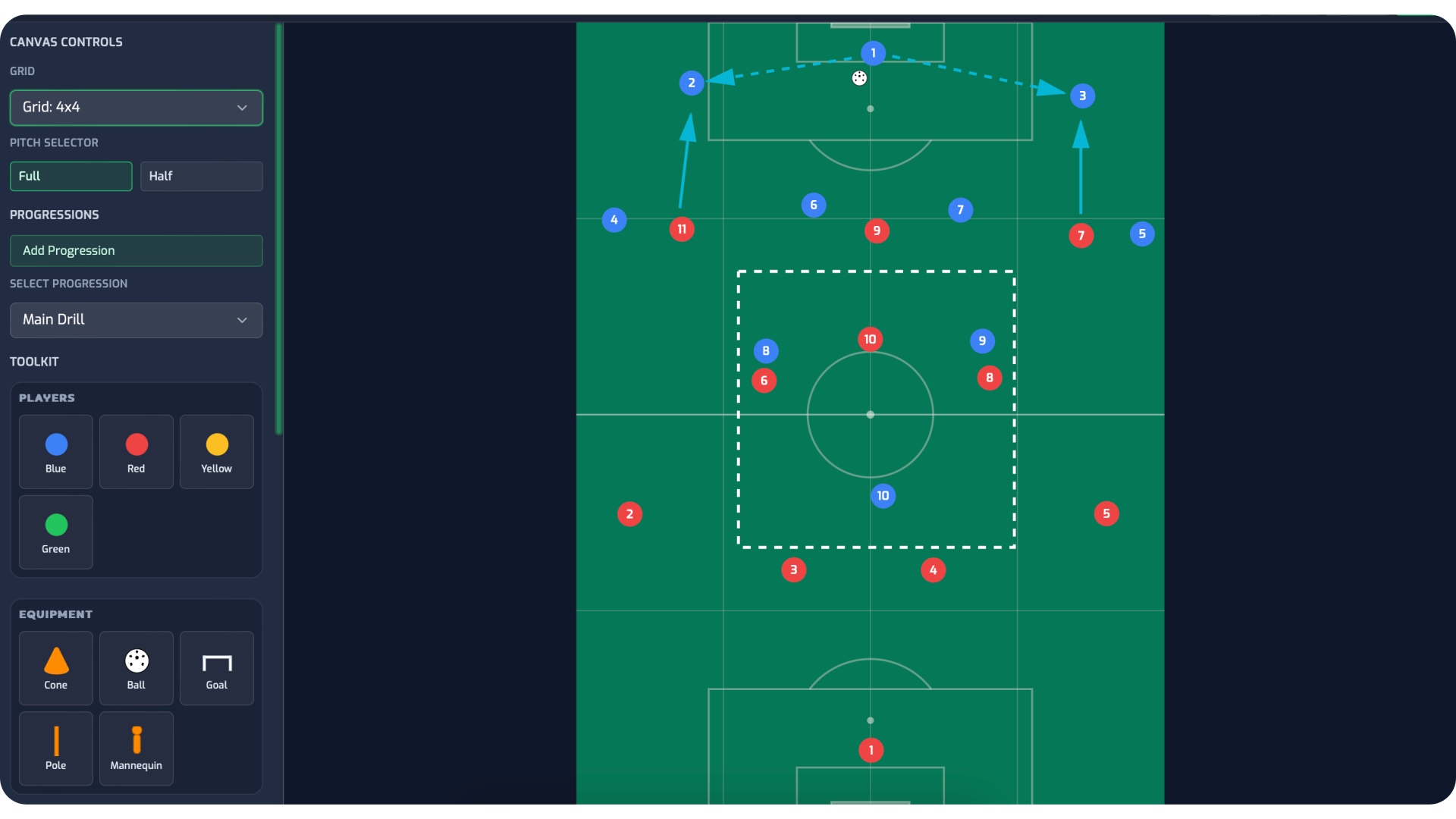
At junior level, the goal is not to install a sophisticated pressing system. It is to develop the habits and understanding that a pressing system requires, so that when players are ready for the full system, the foundations are already in place.
The most appropriate starting point with younger players is introducing a single, clear pressing trigger and a simple coordinated response. For example: when the opposition goalkeeper has the ball, the centre forward engages and the two wide players tuck in to cover the passing lanes into the midfield. That is a manageable, teachable unit of pressing behaviour that introduces the core concept without overwhelming junior players with too many simultaneous instructions.
The physical demands of pressing also need to be managed carefully at junior level. Short bursts of pressing activity in training, built into small-sided games with specific rules that reward winning the ball high, are far more effective than asking younger players to press continuously for extended periods. The goal is to develop the habit of pressing, not to exhaust players or create negative associations with defensive work.
What to focus on at junior level: one trigger, one clear individual role per player when the trigger activates, and a simple recovery shape if the press is beaten. Build familiarity with these elements over multiple sessions before introducing any additional complexity.
With senior players, the coaching of a pressing system can and should go significantly deeper. Players at this level can absorb multiple triggers, understand positional nuance and apply pressing principles across different game states. The coach's job is to build the system methodically rather than assuming senior players will figure it out through exposure.
Start by establishing the trigger hierarchy. Which triggers activate a full team press and which triggers activate a partial press, where only the front line engages while the rest of the team holds shape? Most senior teams benefit from having two or three clearly defined triggers at different levels of intensity, depending on where on the pitch the ball is and the score at the time.
The team's pressing shape needs to be clearly defined for each trigger. When trigger A activates, where exactly is each player positioned? What are the primary and secondary passing lanes they are responsible for covering? Verbal explanation alone is rarely sufficient for this level of detail. Players need to see it, walk through it and repeat it in training before it becomes automatic in a match.
Transition out of the press is where most senior teams lose shape. The moment the press is beaten, the team needs to transition immediately into a compact mid-block or deep defensive shape. That transition needs to be coached as explicitly as the press itself. Leaving it to individual judgment produces hesitation, gaps and the kind of disorganised defensive moments that cost goals at the worst times.
The collective buy-in question is also most relevant at senior level. A pressing system that three or four players are not committed to does not work. The gaps created by half-hearted pressing are more damaging than not pressing at all. This is a coaching and culture conversation as much as a tactical one, and it starts with making sure every player understands their specific role and why it matters to the functioning of the whole system.