
Ask most grassroots coaches what happens in the first fifteen minutes of a session and the answer is usually some version of the same thing. Players arrive, get told to jog a couple of laps, do a few stretches, then the coach blows the whistle and the real session starts. The warm-up is treated as a formality, a box to tick before the work begins, rather than as a meaningful part of the session in its own right.
The consequence is not just that fifteen minutes go to waste. It is that the session that follows starts from a lower base. Players who have spent the opening phase jogging passively and standing in a stretch line are not primed mentally or physically for the demands of the main session. They need another ten minutes of the actual session content before they are fully switched on. By that point, a significant portion of the available coaching time has already been absorbed by transition rather than development.
The warm-up is the first impression a session makes on a player. It sets the intensity, the tone and the expectation for everything that follows. A warm-up that is purposeful, progressive and connected to the session's theme tells players immediately that the next hour is going to be worth their full attention.
A purposeful warm-up achieves three things in sequence. It raises the body's physical readiness progressively, starting at low intensity and building toward the demands of the main session. It activates the movement patterns that the session will require, so players are not making their first sharp change of direction or first explosive pass in the middle of the main activity. And it engages players mentally, bringing their focus into the session environment before the coaching content begins.
These three outcomes are not achieved by laps and stretches. They require a structured progression that moves from low-intensity movement into ball-based activity and then into something that begins to replicate the decisions and interactions of the main session theme. The warm-up does not need to introduce the session's tactical concept explicitly. But it should not feel disconnected from it either.
The following structure works across most youth age groups from U8 upward and can be adapted to any session theme. It runs for approximately fifteen minutes and moves through three phases, each building on the one before.
Phase One — Dynamic Movement (3 minutes)
Players move through a designated area using a progression of movement patterns. Start with light jogging and build through side steps, high knees, heel flicks, skipping and changes of direction on a signal. The coach leads from the front or directs from the side, keeping the group moving constantly. No standing still, no waiting. The goal is simply to raise heart rate and wake up the legs before a ball appears.Keep the area reasonably tight so players are always close to each other and the space feels energetic rather than spread out and flat. At younger ages, add an element of fun to this phase, a colour-coded signal for different movements, a freeze element, anything that makes the movement feel like play rather than obligation.
Phase Two — Ball Activation in Pairs (5 minutes)
Every player has a partner and every pair has a ball. Start with simple passing and receiving at low intensity, both players stationary, focusing on clean technique and soft first touch. After a minute, introduce movement: the receiving player checks away before receiving, or the passer follows their pass and the pair swap roles continuously.
Gradually increase the tempo and the distance of the pass. By the end of this phase, players should be moving sharply, communicating with their partner and making quick decisions about weight and angle of pass. The intensity is moderate, not full speed, but it is clearly higher than Phase One. Every player has touched the ball dozens of times before the main session begins.
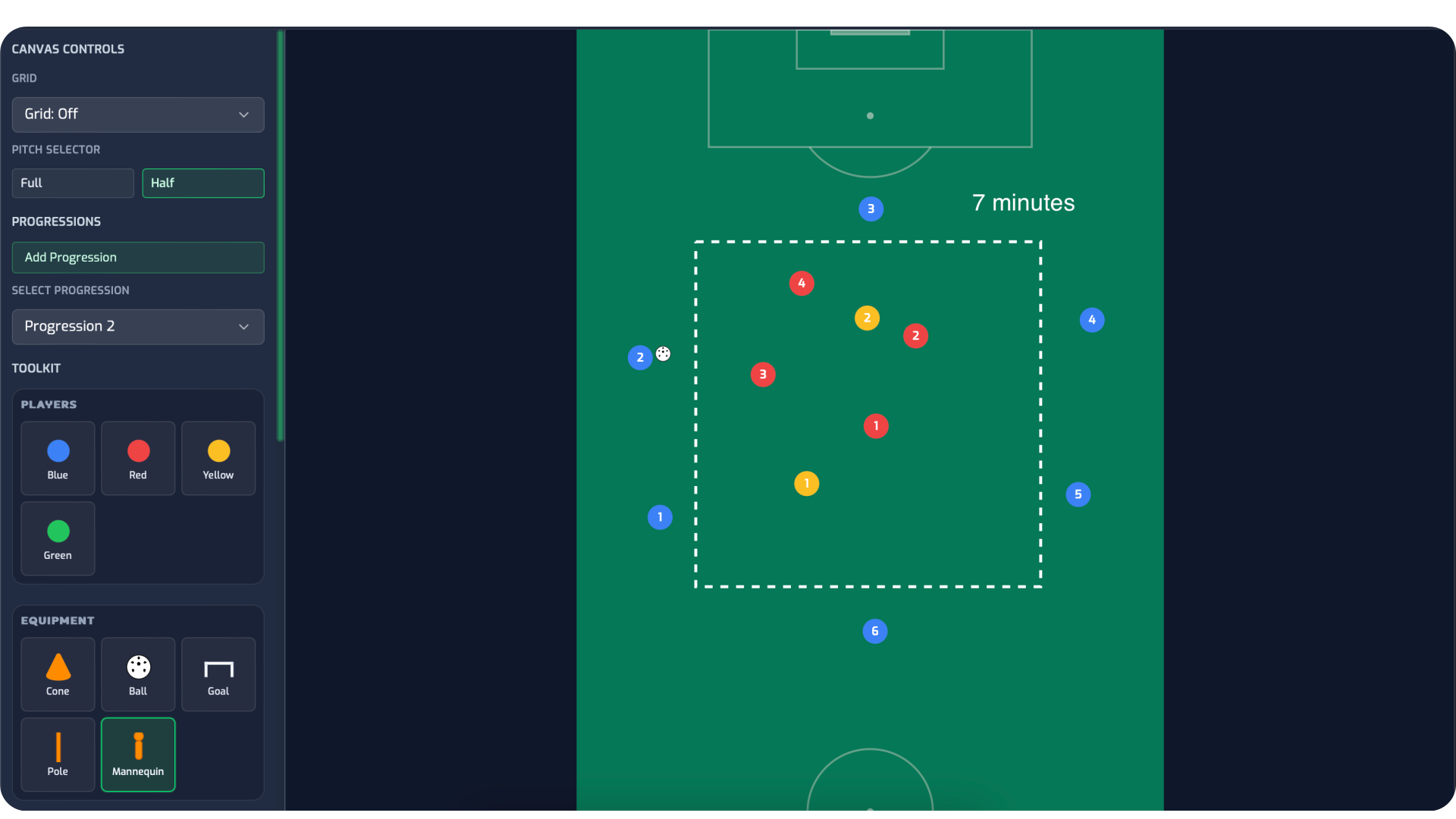
Phase Three — Rondo (7 minutes)
Split the group into small units of five or six players and set up a simple rondo or keep-ball circle. One or two players in the middle depending on the group's age and ability, the rest on the outside working to keep possession. Start at a controlled pace, then let it build naturally as players find their sharpness.
The rondo is not just a physical exercise. It demands quick decision-making, awareness of teammates and opponents and sharp passing under pressure. By the end of this phase, players are physically ready for the main session and mentally engaged in a football problem. The transition from warm-up into main session becomes seamless rather than a gear change.
The three-phase structure above works as a standalone warm-up for any session. But the coaches who get the most from it are the ones who make deliberate choices within each phase that echo the session's main theme.
If the main session focuses on combination play and quick passing, the rondo in Phase Three is an obvious connection. If the session focuses on movement and creating space, the pair work in Phase Two can emphasise checking runs and receiving on the move. These are small adjustments that do not complicate the warm-up but make the transition into the main session feel like a natural progression rather than a hard stop and restart.
This kind of intentional warm-up design requires planning. It cannot be improvised on the way to the training ground. The warm-up needs to be part of the session plan, not an afterthought bolted onto the front of it.
CoachTactiQ's Training Hub includes a dedicated warm-up phase within every session plan. Coaches can design and animate warm-up drills using the drill designer, save them to the drill library and pull them into session plans without rebuilding from scratch each week. The Coach+ plan gives access to a pre-built drill library with warm-up activities across different themes and age groups, which makes it significantly easier to plan purposeful openers consistently rather than defaulting to the same passive routine out of convenience.