
The 4-3-3 is one of the most widely used formations in football at every level of the game. It is also one of the most misunderstood. Coaches adopt it because it looks familiar, because their players have seen it played at the highest level, or because it suits the personnel they have available. But without a clear understanding of why the system works and what each player is actually being asked to do within it, the 4-3-3 can just as easily become a liability as an asset.
This article breaks down the tactical logic behind the 4-3-3, the roles and responsibilities within it and how the coaching approach needs to change depending on whether you are working with junior or senior players.
The 4-3-3 is popular for good reasons. At its core, it is a system built around numerical balance. Four defenders provide a solid defensive foundation. Three midfielders cover the central areas of the pitch, providing both defensive protection and the platform to build play. Three forwards create width, stretch opposition defences and give the team multiple attacking outlets at the same time.
The formation rewards teams that are comfortable in possession and want to play through the thirds rather than over the top. It creates natural triangles across the pitch, which makes short passing combinations easier to execute and harder for opposition teams to press effectively. When it works, the 4-3-3 gives a team control of the game rather than simply reacting to what the opposition does.
It is also a flexible system. The three-midfielder block can be configured in different ways depending on the personnel available and the demands of a specific game. A more defensive setup might see two holding midfielders and one attacking midfielder. A more aggressive setup might invert that, with two players pushing forward and one sitting deep. This adaptability is one of the reasons the 4-3-3 suits coaches who want a system that can evolve as their squad develops.
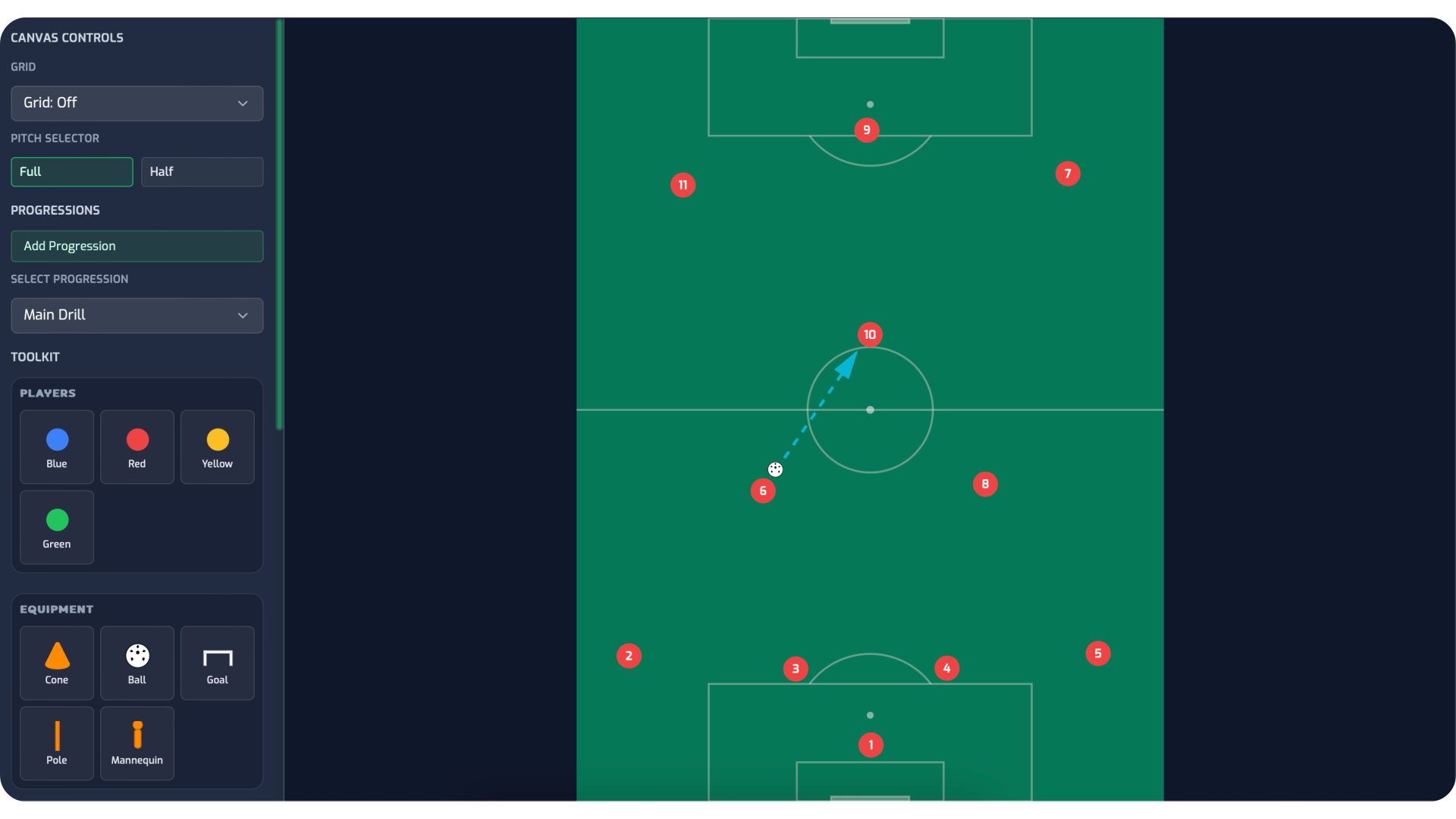
At junior level, particularly with players under thirteen, the full complexity of the 4-3-3 is neither appropriate nor productive. The principles behind the system, width, triangles, compactness in defence, are valuable to introduce, but they need to be taught in simplified form through small-sided games and position-specific activities rather than a full eleven-a-side tactical framework.
The most effective approach with younger players is to focus on the individual responsibilities of one area of the pitch at a time. Start with the attacking third. Help your wide forwards understand when to stay wide to create space and when to come inside to combine. Use small-sided games with overloads that force those decisions repeatedly. Once players are comfortable with those patterns, introduce the midfield layer and how the pivot connects defence to attack.
Avoid trying to coach the whole system in a single session or even a single week. Junior players need repetition in simplified environments before they can apply concepts in a full game context. The goal at this level is to develop players who understand the principles of the system, not players who can execute a rehearsed shape.
One practical way to help junior players visualise positional responsibilities is to show them the formation visually before the session begins. CoachTactiQ's interactive TactiQ Board allows coaches to map out the 4-3-3, show player movements and demonstrate the positional rotations that make the system work, before a player has touched the ball. That visual reference gives younger players a concrete picture of what you are asking them to do, which significantly speeds up the understanding process on the pitch.
With senior and older junior players, the coaching of the 4-3-3 becomes significantly more detailed. Players at this level can absorb and apply tactical concepts in real game situations, and the coaching conversations can move beyond individual responsibilities to collective patterns and phase-specific behaviour.
The areas that require the most coaching attention at senior level are the fullback roles, the defensive shape when out of possession and the transitions between phases. The fullback question is one every coach using this system has to answer: how high do we want them to go, and who is responsible for covering the space they leave? The answer will depend on your squad's defensive capabilities and the level of trust you have in your pivot to protect that space.
Out of possession, the 4-3-3 needs to compress quickly. The three forwards are the first line of defence and their pressing triggers need to be clearly defined. When does the press activate? What is the cue that tells the forwards to engage rather than hold their shape? These are questions that need to be coached explicitly and practised repeatedly before they become instinctive.Transitions are where senior 4-3-3 teams are most frequently exposed. The moment possession is lost, the team is vulnerable if the fullbacks are high and the midfield is unbalanced. Coaching the immediate reaction to losing the ball, which players press, which ones recover and which ones hold position, is as important as any attacking pattern work.
The TactiQ Board is equally valuable at senior level for pre-game preparation and team meetings. Being able to show your players the specific defensive shape you want when the press is triggered, or the attacking pattern you want to run down the left channel, turns a verbal explanation into something players can see and understand before they are asked to execute it under match conditions.